
Domestic Violence Awareness Month
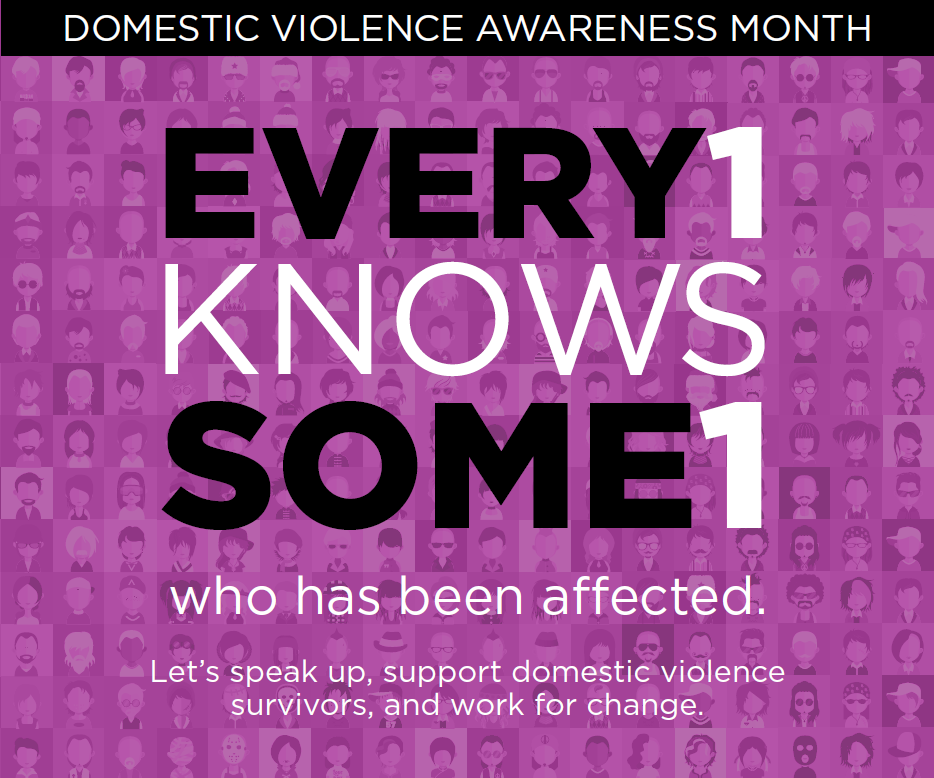
This October, the purple ribbons and messages of solidarity you may see around Charlotte are more than symbolic gestures. They mark Domestic Violence Awareness Month, a national observance that reminds us of the prevalence of abuse, the silence that often surrounds it, and the urgent need for community response. This year, Jewish Family Services’ (JFS) campaign theme, #Every1KnowsSome1, is a reminder that domestic violence is not an issue happening “somewhere else” to “other people.” It is here, it is widespread, and it affects people we know.
Domestic violence touches lives across every race, religion, age, gender, and socioeconomic group. National statistics show that one in three women and one in four men experience some form of abuse in their lifetimes. According to Jewish Women International (JWI), in Jewish communities, the rates are similar: studies estimate that 15 to 25 percent of Jewish women and three to five percent of Jewish men experience battering or abuse from an intimate partner. Despite these sobering numbers, the subject has historically been under-acknowledged in Jewish communal life.
Throughout the month of October, JFS will have information in the front lobby of the LJCC to spread awareness and education. Confidential help is available for anyone experiencing domestic violence. Jewish Family Services offers counseling and resources locally, and the National Domestic Violence Hotline can be reached at 1-800-799-SAFE (7233). For survivors, the path forward is often difficult, but the message of this October’s campaign is clear: no one is alone, and together, communities can work to end the silence that has shielded abuse for far too long.
Do you know Michael?
Michael’s boyfriend insists on knowing where he is at all times and questions him if he doesn’t answer texts quickly. Michael tells his friends it shows his partner cares, though he’s started spending less time with them.
Do you know Ruth?
Ruth’s husband of 6 decades criticizes her daily, makes all financial decisions and reminds her she’d have nothing without him. She rarely talks about it, saying “that’s just the way things are after so many years.”
Do you know Sharon?
Sharon is raising 3 kids while trying to keep peace at home. Her husband sometimes throws things when angry and threatens that she’ll lose the kids if she leaves him. Without access to their money, she tells herself to make the best of it.
Do you know Ella?
Ella, a high schooler, is thrilled to have a boyfriend who gives her so much attention. He gets upset if she spends time with friends, and she feels pressure to text back immediately or he won’t speak to her for days. She tells herself it’s because he loves her so much.
How is the Jewish Community unique regarding Domestic Violence forms of abuse?
Unique cultural forms of abuse are recognized, including the withholding of a get (religious divorce) as a tool of control.
What is Shalom Bayit? How might it hide our pain?
There is a strong tendency toward under-reporting due to stigma, shame, and denial, which may be linked to community expectations of marital harmony (Shalom Bayit) and concerns about reputational damage.
Does Domestic Violence happen less in the Jewish community?
No, domestic violence occurs in Jewish households at the same rate as in the wider U.S. population.
Do Jewish women leave Domestic Violence relationships sooner?
Jewish women tend to remain in abusive relationships significantly longer, on average 7 to 13 years, compared to 3 to 5 years among non-Jewish women.
Domestic Violence Resources
National Domestic Violence Hotline 1-800-799-7233
Mecklenburg County CSS Domestic Violence Counseling 704-336-3210
Greater Charlotte Hope Line (Crisis Line for parenting, DV and sexual assault) 980-771-HOPE (4673)