Recent Study Highlights American Jewish Poverty

Recent Study Highlights American Jewish Poverty

Charlotte Jewish News, February 2025

By Howard Olshansky, JFS Executive Director

A recent study conducted by the Tulane University Grant Center for the American Jewish Experience, in collaboration with Rosov Consulting, highlights that a significant portion of the American Jewish population faces economic hardship. The study, titled “On the Edge: Voices of Economic Vulnerability in U.S. Jewish Communities,” was commissioned by The Harry and Jeanette Weinberg Foundation. Using a mixed-methods approach, the study gathered data from a survey of 1,958 respondents, in-depth interviews with 175 participants, and conversations with 38 human service professionals. The Network for Jewish Human Service Agencies, the national membership organization for Jewish Family Service organizations, played a key role in recruiting participants for the study.

The findings challenge the myth that poverty isn’t a Jewish issue. Like households across the United States, Jewish households with children, individuals with disabilities or chronic health issues, and single parents are more likely to experience financial vulnerabilities.

Others within the Jewish community also face economic challenges. Orthodox households, people of color, LGBTQ+ individuals, and Russian-speaking Jews are particularly vulnerable.

The study defines economic vulnerability as financial insecurity or instability. According to the findings, situational vulnerability affects 61% of respondents who are currently or recently struggling. This vulnerability is often triggered by unexpected life events such as job loss, health crises, or family dissolution. Other contributing factors include divorce, incarceration, substance abuse, and caregiving responsibilities. In fact, 74% of respondents reported experiencing one or more of these events.

At JFS, these findings come as no surprise. While we lack specific data about poverty in the Charlotte Jewish community, we know that many local families are struggling. Rising housing costs in the Charlotte area, coupled with national inflation and increasing day-to-day expenses, are taking a toll on vulnerable populations—especially single parents and those more likely to be unemployed.

One group JFS sees frequently is older adults. Many seniors living on fixed incomes are just barely getting by. The numbers tell the story: the average monthly Social Security income in North Carolina is approximately $1,800. Meanwhile, the average rent for a one-bedroom apartment in Charlotte is $1,400, not including utilities. Add food, healthcare costs, transportation, and other essentials, and expenses far exceed income.

This issue has worsened over the past few years as rents in Charlotte have risen. Seniors receiving case management services at JFS called their case managers in a panic after receiving notices that their rents were increasing by $200-$400. Without additional support, many faced eviction and homelessness. Thanks to philanthropic support, JFS created a fund to help supplement rent increases for Jewish seniors at risk of losing their homes.

However, seniors are not the only members of our community who are struggling to make ends meet. Many working families, particularly those with a single income, are also under financial strain. According to the Charlotte Business Journal, the annual salary required to live comfortably in Charlotte is $101,388, with $50,700 needed just for basic expenses. This equates to $24.38 per hour for one individual to cover essentials. By comparison, the average salary for a teacher in Charlotte-Mecklenburg Schools is $46,715—or $22.60 per hour.

At JFS, we see many individuals struggling with basic finances and facing additional challenges that impact their ability to manage. These may include mental health issues, a child with a disability, or an aging parent in need of care. Services like the JFS food pantry and case management are critical in connecting clients with the resources they need. For instance, using the food pantry might allow a senior to purchase medications instead of groceries, or help a family pay their utility bill. Case management services may assist with budgeting or connect clients to caregiving support, transportation resources, credit counseling programs, or government-funded housing and utility assistance programs.

Most importantly, the face of poverty doesn’t always look the way we expect. It’s not confined to one specific area of Charlotte. While lower-income neighborhoods certainly face greater challenges, financial hardship can affect individuals and families in any zip code. If you’ve donated food to the JFS Food Pantry or made a financial contribution, you have been helping someone in need, wherever they may live.

Building Stronger Futures: Prevention Strategies for Teen Dating Violence

Building Stronger Futures: Prevention Strategies for Teen Dating Violence

Charlotte Jewish News, February 2025

By Rachel Green, MSW, LCSW, JFS Director of Programs and Services

As a community, we all have dreams for our children and the young people in our lives. We envision them growing up to be kind, confident, and successful— finding their place in the world with the support of healthy relationships. What kind of partner do you hope they find? What kind of partner do you hope they become?

It’s easy to picture them excelling in school or sports. We might even imagine dates to prom or fun college romances. But it can be harder to envision them navigating the complexities of romantic relationships. Yet, as we reflect on what we want for our children, we must also consider our critical responsibility to guide them through the complicated—and potentially harmful—world of dating and relationships. By learning about teen dating violence and how to talk to the children in our lives about consent and healthy relationships, we can empower them to grow into the thriving adults we hope they will become.

Understanding Teen Dating Violence

February is National Teen Dating Violence Awareness and Prevention Month (TDVAM), and the reality is that teen dating violence is more common than many of us would like to admit. According to Loveisrespect. org, one in three U.S. teens will experience physical, sexual, or emotional abuse from someone they’re in a relationship with before becoming adults. Nearly half (43%) of U.S. college women report experiencing violent or abusive dating behaviors.

TDVAM emphasizes that prevention starts with awareness. By understanding the warning signs of teen dating violence, we can provide our children with the tools they need to form healthy relationships.

When we think of teen dating violence, we may picture physi-

cal abuse or yelling. While these are forms of abuse, teen dating violence also includes emotional abuse, controlling behaviors, intimidation, stalking, and more. When talking to teens, it’s important to use clear and relatable language so that they can identify red flags.

Forms of Teen Dating Violence

  • Emotional abuse: Controlling behaviors, name-calling, humiliation, threats to ruin a reputation or spread rumors, or threats to disclose sensitive information.
  • Intimidation: Physical threats to the teen, their friends, family, or loved ones.
  • nline stalking: Monitoring online accounts, demanding social media logins, checking private messages, or restricting private social media usage.
  • Online intimidation: Threatening to post sensitive material, spreading rumors, or making other harmful online threats.
  • Isolation: Efforts to separate the teen from friends and family.
  • Power and control: Dictating what the teen wears, who they see, what activities they participate in, or how they spend their time.
  • Physical abuse: Hitting, slapping, shoving, or any form of physical harm. While this is often the most obvious form of abuse, teens may hesitate to speak up due to fear or shame.
  • Stalking: Repeated, unwanted attention or contact that causes fear or safety concerns. This may occur in person or online.
  • Sexual violence: Any unwanted sexual act without consent. Teens may not fully understand what constitutes consent, making it crucial to have these conversations early.

Teaching Consent

If we recognize the red flags of unhealthy relationships, how do we teach our children the skills to build healthy ones? One answer is to teach the concept of consent.

Consent is not just about sexual activity—it is the foundation of any healthy relationship. According to Loveisrespect.org, “Consent is an ongoing mutual agreement between partners about what they want to experience.”

The familiar phrase “no means no” oversimplifies the complexities of mutual decision-making and respect. As Loveisrespect. org explains, consent is not reactive but proactive. It is a shared expression of comfort and desire within a relationship.

We can start conversations about consent with our teens by asking: What do you want in a relationship? What feels safe or unsafe to you? What have you observed in movies, shows, or real life that reflects healthy or unhealthy relationships?

Teaching consent isn’t just for teens; it’s something we can instill in children from a young age. Encourage them to ask permission before touching someone, respect others’ boundaries, and understand the importance of saying “no” when something doesn’t feel right. These lessons will prepare them to navigate relationships throughout their lives.

Building a Better Future

By helping our children envision relationships built on mutual respect, safety, and consent, we can work toward the prevention of teen dating violence. Let’s equip young people with the tools they need to thrive and create a future filled with healthy, meaningful relationships.

National Caregiver Month: Caring for the Caregive

National Caregiver Month: Caring for the Caregive

By Sheryl Gerrard, MA, GC-G, CDP, JFS Senior Engagement Manager

As Rosalynn Carter famously stated, there are only four kinds of people in the world: those who have been caregivers, those who are currently caregivers, those who will be caregivers, and those who will need caregivers. Her point was that caregiving is a nearly universal experience. That’s why every November we celebrate National Family Caregivers Month. While caregivers should be celebrated every day, this is a time to recognize and honor caregivers nationally, raise awareness around caregiving issues, educate communities, and work to increase support for our nation’s caregivers.

In the United States today, it is estimated that 53 million adults are providing care for a spouse, elderly parent or relative, or a child with disabilities. Many of us provide support or assistance to family members or friends without identifying ourselves as caregivers. We may feel we are just fulfilling the obligations of our role as spouses, adult children, parents, or considerate neighbors. Recognizing that one is a caregiver can be a first step towards reducing the stressors often associated with this life situation. You may be a family caregiver if you are the person who buys groceries, cooks, cleans the house, or does laundry for someone who needs some help with these things. A caregiver is also the person who helps a friend or family member get dressed, take a shower, or take their medication properly. Or even the person who makes medical appointments, communicates with a loved one’s doctors, or drives them to appointments and to run errands. All of these situations describe “caregiving,” and if you are doing any or all of these things, you may be feeling drained, exhausted, or burned out.

Often, the caregiving journey is more of a marathon than a sprint and it’s important that you equip yourself for the long haul. Whether you are just starting out on your caregiving journey or you’ve been at it for a while, there are some tools that can be useful along the way.

– Stay on top of your own health and well-being: often, caregivers put their own needs aside while focusing on their loved ones and this can contribute to both physical and emotional issues. Make time to schedule your own medical appointments, exercise, and participate in selfcare activities so you can feel your best during difficult times.

– Let others assist: if someone offers to help, let them, and they will be encouraged to offer again in the future. Remember that a marathon runner gets support and encouragement from others, not to mention drinks and snacks along the way! When you feel like you’re on your own, reach out to a friend or family member to help you with some tasks so you can refuel.

– Join a group: there are many options for both in-person and virtual support and educational groups. By participating in a support group, you can decrease your feelings of isolation and learn from others in similar situations. Jewish Family Services offers several programs for family caregivers, such as a Parkinson’s Family Caregiver group and our quarterly Caregiver Speaker Series, as well as Caregiver Thrive Learn Connect (TLC), a 6-session psychoeducational group to teach practical coping skills and stress reduction techniques. Check our website for more information.

– Keep humor in your life: laughter really is the best med-icine. Watch a silly movie or read the comics and find things to laugh about with the loved one in your care as well; everyone needs playfulness in their day.

– Seek professional guidance when needed: whether you’re looking for supportive counseling for yourself or resources to help you care for your loved one, reach out to Jewish Family Services to receive knowledgeable direction to make your journey more manageable. Our Counseling Services can help you deal with life’s challenges and our Senior Engagement team has a wealth of information to support you as a caregiver.

– Find the joy in caregiving: having the opportunity to provide care for someone who cared for you can be rewarding and gratifying. Looking at your situation with a positive perspective can provide a sense of fulfillment and build self-confidence as you develop the skills needed to be a successful caregiver.

Jewish Family Services recognizes and understands the stresses family caregivers experience, and offers several different supportive services. Caregiver Thrive Learn Connect (TLC) is one of these programs. JFS is one of only a small handful of professionals with master-level training in this science-backed therapeutic training. This program is a six-week series that provides practical tools, online resources, and participant materials. Participants develop individual action plans each week and build skills and tools to manage stress, depression, frustration, self-care, and isolation. Results of this program show caregivers report a significant reduction in depressive symptoms and increases in self-confidence in relation to caregiving. Other caregiver support services include support groups and connections to resources.

If you or someone you know is feeling stressed or overwhelmed by managing a loved one’s care and has questions or would benefit from support, please contact us at (704) 364-6594 or jfscharlotte.org.

Finance and Administrative Services Manager

Finance and Administrative Services Manager

Finance and Administrative Services Manager

JOB TITLE: Finance and Administrative Services Manager 
PROGRAMS: All Jewish Family Services Programs 
FSLA STATUS: Exempt 
DIRECT REPORTS: Administrative Support Specialist, Client Services Specialist, Accounting Assistant 

POSITION SUMMARY: 

Reporting to the Executive Director, the Finance and Administrative Services Manager is responsible for the overall management of administrative functions for the organization including finance, risk management, office operations, human resources and technology. 

DUTIES / RESPONSIBILITIES: 

Financial Management 

  • Review, implement and ensure compliance with all financial policies and procedures of JFS, including necessary internal controls. 
  • Oversee cash management, accounting and financial functions, including but not limited to: general ledger, accounts payable and receivable, payroll and all related filings, bank and investment account reconciliations, and all billing. 
  • Ensure the integrity of all financial transactions, and establish streamlined accounting processes with a focus on efficiency and reporting. 
  • Prepare monthly financial and statistical reports and offer financial analysis in support of JFS’ strategic planning goals. 
  • Work with the Executive Director and Treasurer to provide monthly finance reports to the Board of Directors. 
  • Responsible for ongoing analysis of costs, potential cost savings and cost allocation, budgeting, and financial forecasting. 
  • Oversee JFS investments, including short- and long-term investment strategies of cash reserves, endowment funds, JFS retirement plan, and designated funds. 
  • Ensure adequate insurance coverage, including but not limited to directors and officers, workman’s compensation, umbrella, liability, malpractice, property, etc. 
  • Serve as a liaison to outside auditors. Prepare schedules and provide required documentation for annual independent audit and Form 990. 
  • Ensure compliance with all corporate and non-profit filing requirements, including audit, Form 990, Charitable Solicitation License(s), and other filings as required by the organization or state and federal law. 
  • Prepare and oversee annual operating budget, including preparation and distribution of monthly and year-end financial statements, budget forecasting, and identifying cost-saving opportunities. 
  • Oversee billing component of Electronic Health Record 
  • Responsible for reviewing, revising, communicating and monitoring workflows and processes as it pertains to finance, accounting, risk management, and billing. 

Office Operations 

  • Negotiate equipment leases. 
  • Oversee the management of office supplies, equipment and maintenance needs for JFS. 
  • Work with all vendors as it relates to the functions above. 

Human Resources: 

Oversee the management of human resource policies, procedures, and employee benefits as per the JFS Personnel Manual and in compliance with all state and federal laws governing employment. 

  • Prepare and submit payroll for all employees of JFS and related entities, including reconciliation of time sheets, paid time off, payroll deductions and year-end tax reporting. 
  • Oversee retirement plan(s), including working with third-party and disability consultants/brokers, managing employee enrollment, and maintaining plan compliance. 
  • Document and track employee Paid Time Off. 
  • Conduct worker’s compensation and disability audit. 
  • Oversee the implementation of pre-employment procedures for all new prospective employees. 
  • Manage the enrollment of employees for all insurance benefits. 
  • Maintain all personnel files. 

Information Technology: 

  • Sever as Subject Matter Expert for technology functionality and recommend purchases and implementation. 
  • Work with Foundation of Shalom Park IT staff to ensure available technology meets the on-going needs of staff and programs. 
  • Maintain current inventory of all technology equipment. 

Fundraising and Development: 

Work closely with management staff, tracking proper documentation of donations and gift designations. 

  • Interface with donors as needed, responding to questions on donations, account balances, use of funds, etc. 
  • Ensure reconciliation between donor and finance reports. 

Supervisory, Management, Strategic, Risk Management 

  • Responsible for the job specific orientation, training, supervision, and annual performance evaluation of the Administrative Assistant, Client Services Specialist and Accounting Assistant. 
  • Assign and review work load of front office staff. 
  • Creates opportunities for professional growth for supervisees. 
  • Serve as a member of the Management Team. 
  • Participate in Board of Director committees as assigned by the Executive Director. 
  • Attend Board Meetings as needed, including preparation of relevant reports, documents, and data. 

KNOWLEDGE AND SKILLS: 

  • Non-profit accounting and compliance. 
  • Experience working with multiple funding streams. 
  • Experience with preparing for non-profit audits. 
  • Demonstrated ability and experience in generally accepted accounting principles. 
  • Excellent oral and written communication skills. 
  • Exceptional computer skills, including strong knowledge of Microsoft Office applications and finance database management. 
  • Ability to positively interact with all levels of management, community leaders, staff, clients, and donors. 
  • At least two years of previous staff supervisory experience. 
  • Excellent customer service skills. 
  • Must be organized, efficient, capable of multi-tasking, detail-oriented and self-motivated. 
  • Demonstrated ability to work closely with others in a team environment. 

MINIMUM QUALIFICATIONS: 

A Bachelor’s Degree with a degree with at least five years of experience working in a finance related position. Experience working in a non-profit organization and experience in human resource functions preferred. 

To apply for this position, please email resume to:  info@jfscharlotte.org 

Finance and Administrative Services Manager

Senior Engagement Specialist/Case Manager

Senior Engagement Specialist/Case Manager

Job Title: Senior Engagement Specialist/Case Manager
Programs: All JFS Programs
Population Served: Adults and Older Adults
FSLA Status: Full Time Non-Exempt

POSITION SUMMARY:

The Senior Engagement Specialist/Case Manager is responsible for assisting with program development, care management, information and referral and outreach services to Adults and Senior Adults. The Senior Engagement Specialist/Case Manager reports to the Senior Engagement Manager.

Employment Classification:

The Senior Engagement Specialist/Case Manager is a full-time non-exempt position.

Duties/Responsibilities:

Individualized Senior Engagement and Case Management Services, which may include

  • Conduct case management assessments to determine the financial, housing, medical, emotional, and physical needs of adults/families, senior clients and caregivers.
  • Work with clients to create customized case management “Life Plans” to reflect goals, desired outcomes and target areas for resources and referrals.
  • Provide ongoing case management services to evaluate and reassess client progress on “Life Plans” with short and long-term goals and make modifications to these as necessary.
  • Refer clients to appropriate community resources and advocate for or assist the client in obtaining such services.
  • Submit timely documentation and maintain accurate, complete case management documentation of all services and client related activities.
  • Establish and maintain close working relationship with clients, caregivers/families, and other community professionals.
  • Ensures that community resource information is kept updated and that staff is kept informed.
  • Coordinates services with other JFS staff.
  • Perform other duties as assigned.

Community Outreach Services

  • Assists in the planning and implementation of programming, educational and socialization groups, and outreach efforts to seniors living independently in the community.
  • Work with partner organizations in the community to identify senior clients in need of services and connecting senior clients to local supportive services.
  • Educates the community on aging issues and resources to establish JFS as the Jewish community’s resource for the aging community.
  • Promotes JFS at various professional and community settings as it relates to senior services.
  • Assists in maintaining community contacts and relationships to maximize use of community resources.
  • Represents JFS at organizational or community meetings as it relates to services for seniors.
  • Assists in the Coordination and/or implementation of workshops and lecture series geared at issues facing senior adults and caregivers.
  • Collaborate with community partners in implementing Senior specific programs.

Admin and Strategic

  • Performs basic administrative tasks such as record keeping, charts managements, and statistics related to performance and productivity of programs and services on a monthly basis.
  • Assist the Senior Engagement Manager to meet outcomes and benchmarks for success of senior services.
  • Collaborates and assists the Senior Engagement Manager, Director of Programs and Services, and Executive Director in assessing the needs of seniors in the community.

Knowledge and skills:

  • Knowledge of issues impacting older adults.
  • Ability to identify and access resources for Adults, Families and Senior Adults in the greater Charlotte community.
  • Understands service delivery trending in the aging community.
  • Comfort level and ability to speak and present in public.
  • Excellent verbal and written communication skills.
  • Good organizational skills.
  • Ability to plan, implement, and coordinate programs.
  • Ability to use basic computer software programs such as Microsoft word, outlook and data entry.

Minimum Qualifications:

A Bachelor’s Degree, preferably in the Social Services. At least two years of experience working with the Senior Adult population preferred.

To apply for this position, please email resume to:  info@jfscharlotte.org 


LLG Recap

LLG Recap

LLG Recap

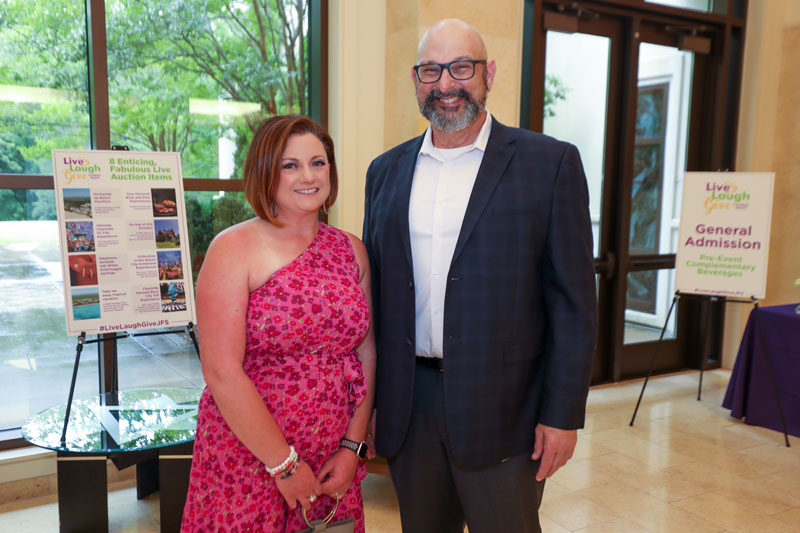
On June 11 more than 300 guests “laughed and gave” at Jewish Family Services’ (JFS) Live Laugh Give comedy night fundraising event. This year recognized honorees, Eric and Susan Lerner, for their many contributions to JFS, the Jewish community and the greater Charlotte community. The event welcomed back headliner, Orny Adams who did not disappoint with his one-liners and jokes. Howard Olshansky, JFS Executive Director, shared the statistics of the sharp increase in needs that have resulted in a waiting list of people looking for support. He went on to explain that “this is not unique to JFS, the need for mental health support and case management services for senior adults has seen a dramatic increase in just the first 3 months of 2023, more so than the entire year in 2022.” Oshansky shared, “we are so moved that once again our community opened their hearts and the event raised over $200,000 to help JFS secure the necessary staffing to meet the growing mental health needs of our community and ensure our community’s seniors have the means to live independently in safe and stable housing.”

Adina Loewensteiner and Andrew Bernstein co-chaired the event, and we are grateful for the generosity of our sponsors, spearheaded by our Entertainment Underwriters, Gary and Jodi Michel. A Sponsor Reception included a meet and greet with Adams and heavy hors d’oeuvres preceded the event followed by a post event Dessert reception, underwritten by Pinnacle Financial Partners.

The monies raised from Live Laugh Give and the Family to Family Campaign beginning in the fall, along with tributes and generous donations throughout the year, helps ensure JFS continues to provide the support our community has come to depend on. Live, Laugh, Give exceeded expectations, a success not possible without the support of our community. The philanthropic support to JFS’ fund raising activities truly represent the community’s commitment to ensure JFS is able to engage, connect and heal those struggling in our community. For more information on donating funds, contributing to the food pantry or volunteering your time, please visit our website at JFSCharlotte.org or call 704-364-6594.