Holocaust Survivors Enjoy an Afternoon at the Theatre

Holocaust Survivors Enjoy an Afternoon at the Theatre

Holocaust Survivors Enjoy an Afternoon at the Theatre

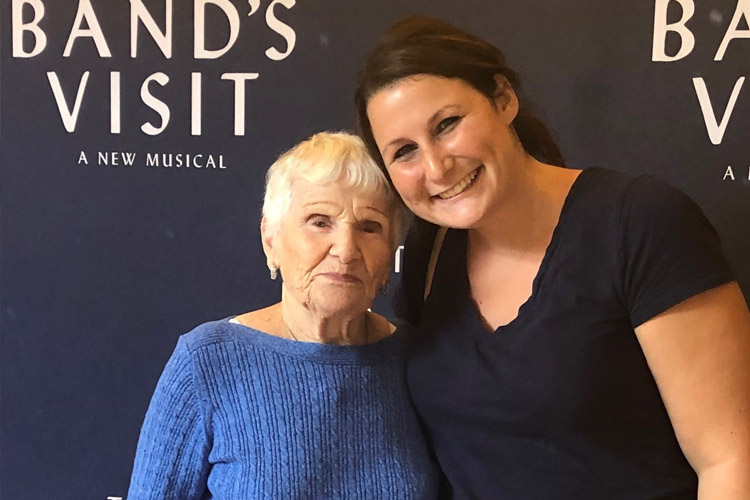
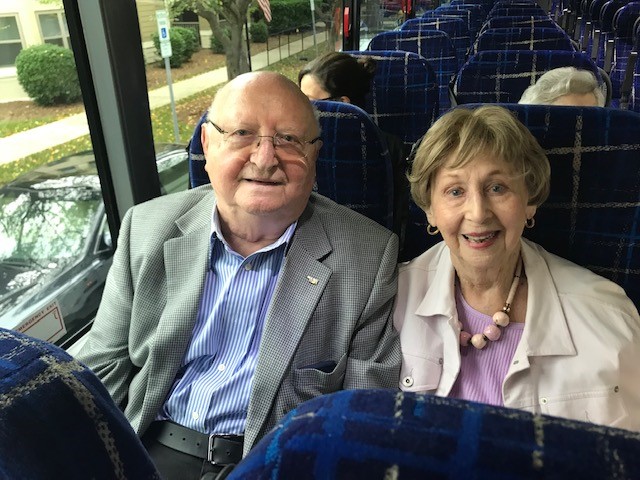
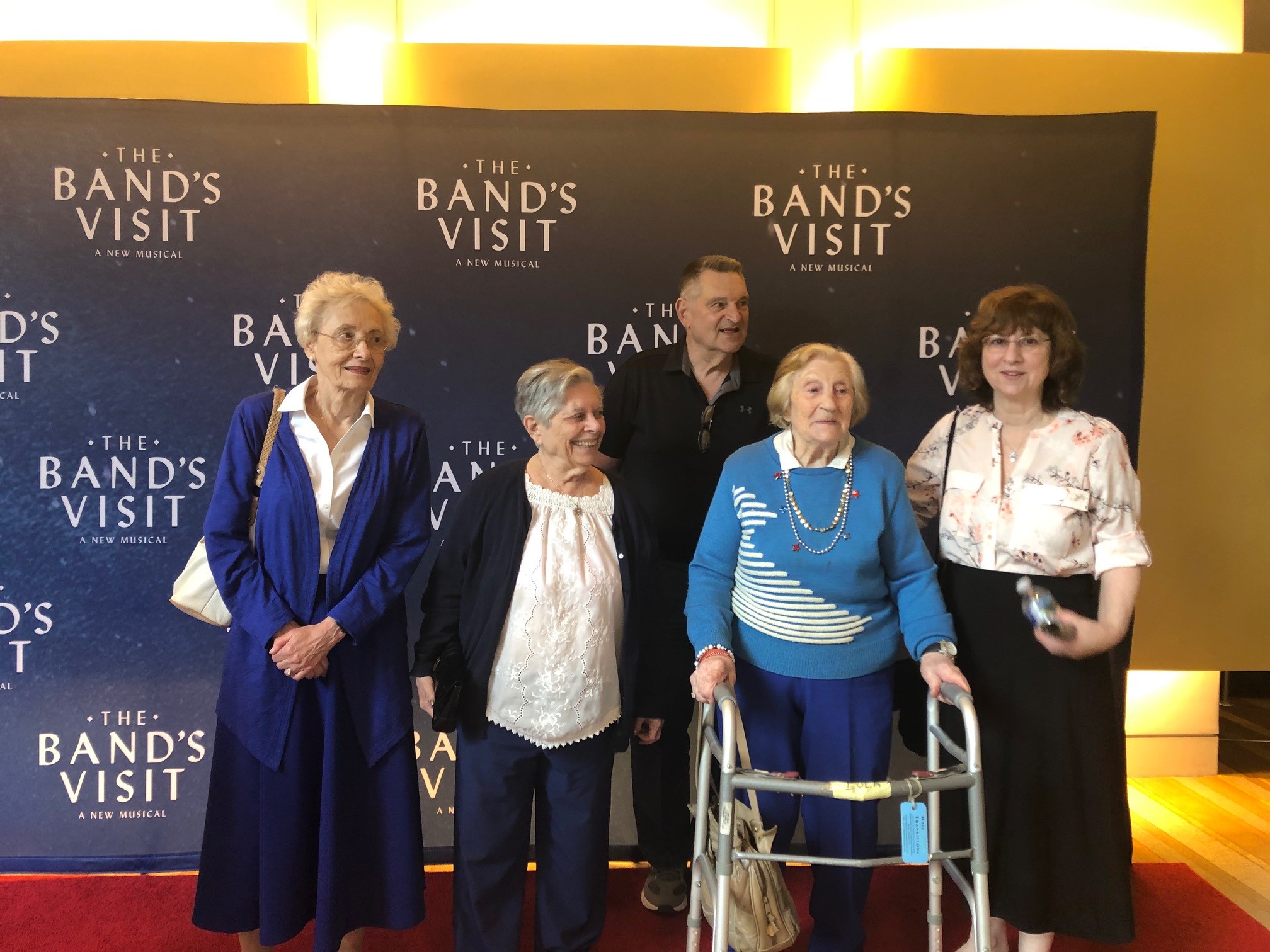
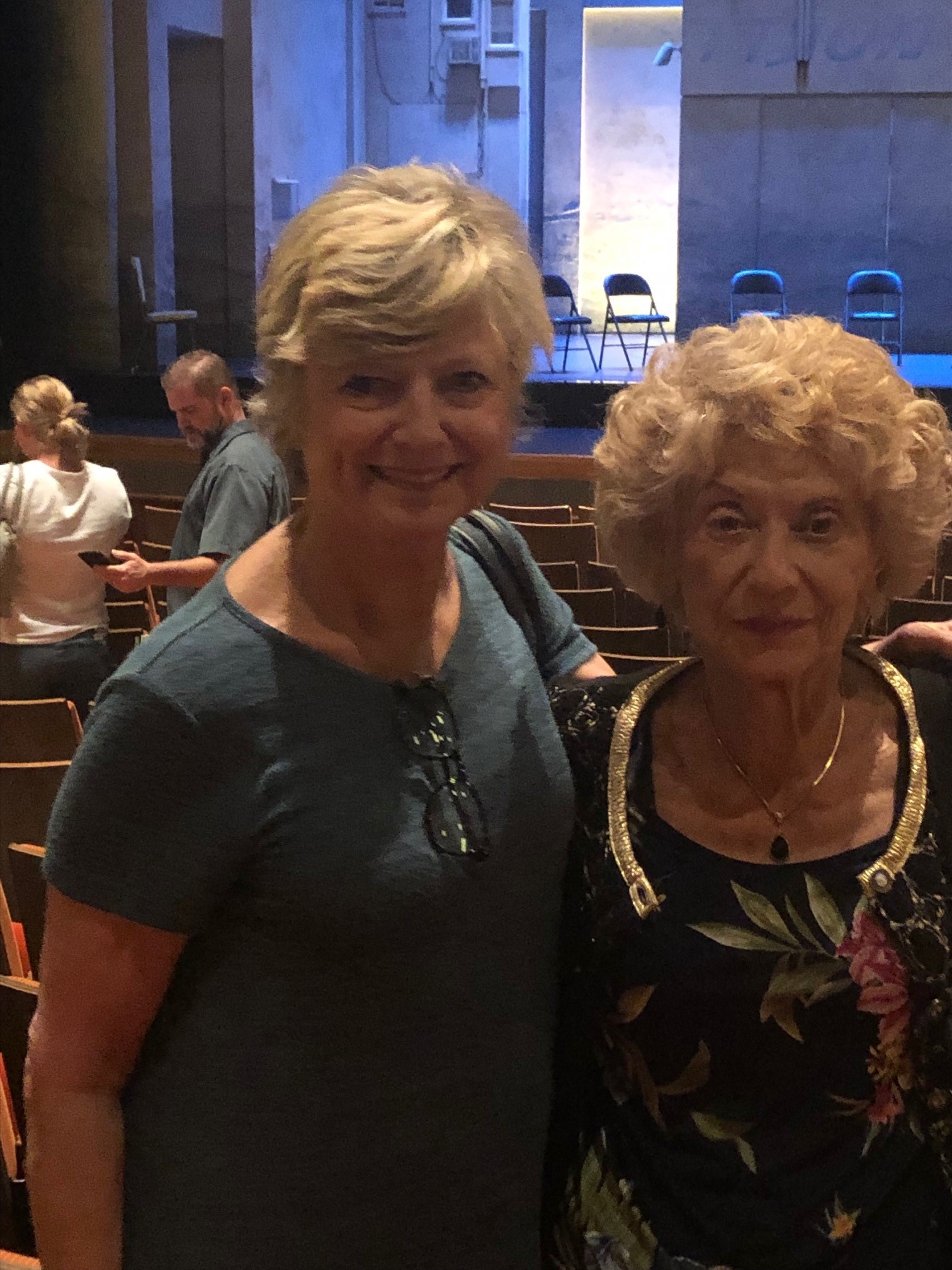
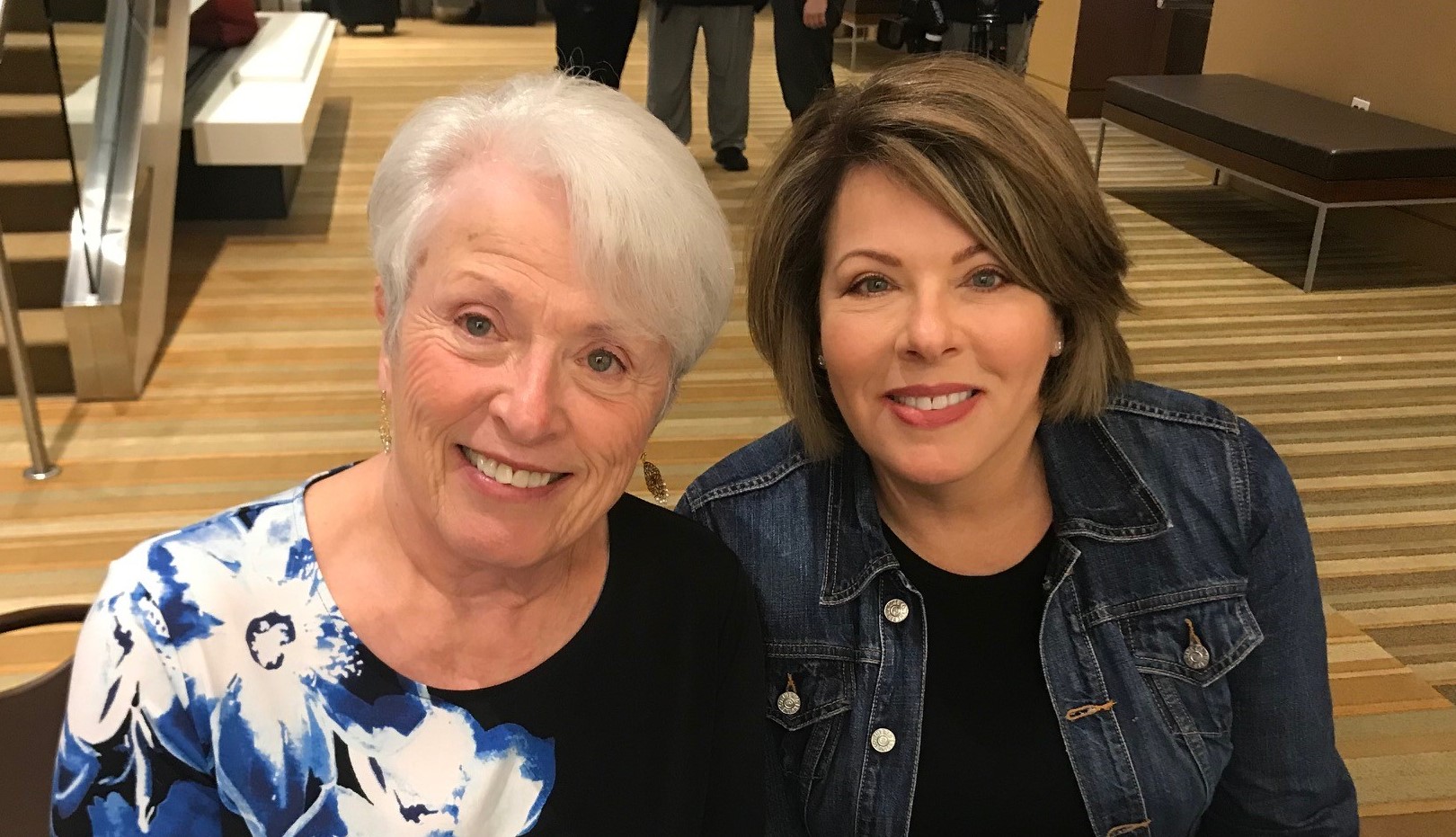
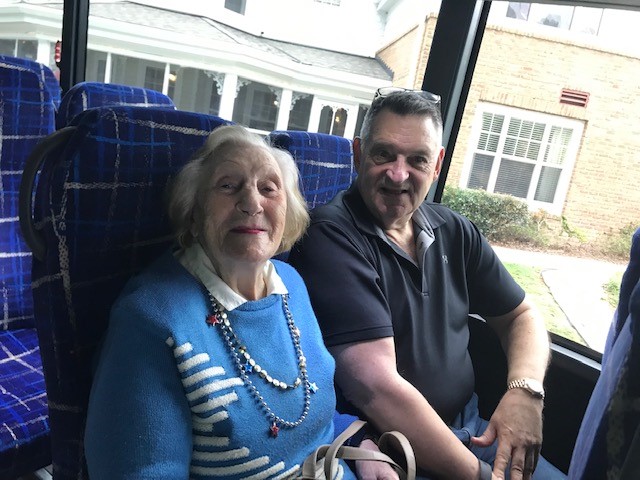
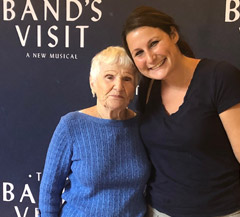
When the cast of the Broadway show, The Band’s Visit,  heard there were Holocaust survivors in the audience they  made it a point to come out after the show to mingle with  them. Everyone was delighted. JFS transported and welcomed  approximately 17 survivors and their family members  to a private luncheon and show at the Knight Theater  at the Levine Center of the Arts.

Many thanks to The Blumenthal  Performing Arts Center for the lovely room and  The Jewish Federations of North America (JFNA) Center  for Advancing Holocaust Survivor Care, the granting  body who has funded programs such as this one in order to  connect, engage and enrich the lives of our community’s  Holocaust survivors.

School Violence – Yes, There is Hope & What You Can Do to Help

School Violence – Yes, There is Hope & What You Can Do to Help

School Violence – Yes, There is Hope & What You Can Do to Help

The headlines appear almost  daily – another school shooting.  It strikes fear in the hearts of everyone  you know: parents, grandparents,  and especially the staff,  teachers, and students who must  enter a school every day. 

Now that the school year is  getting started, safety will most  certainly be a major concern.  What should be put in place for  student and staff safety? What is  the best kind of security system?  Some schools are hiring more security  officers, others are creating  training programs for students.  Not only should this advanced  preparation potentially cut down  on harm to students, but it gives  students, teachers, and parents a  feeling of control. A feeling that  something is being done. And yet  our anxieties surrounding this are  warranted and very real.  

New data shows that school  violence is linked not only to  mental health problems, but to  physical health problems and  risk-taking behavior, including  drug and alcohol use. Social exclusion  and low self-esteem are  factors of violence and there is a  connection between being a victim  of bullying or fighting and  school violence.  

Actually, 30% of young people  admit to bullying and 23%  of high-schoolers report being in  a physical fight in the past year.  Students report being threatened  or injured with weapons on  school property and there were 82  school shootings in 2018.  

The Safe Schools Initiative Report  suggests that 71% of school  violence attackers were victims  of bullying; a resounding 87% of  the offenders left evidence that  they were bullied severely.  

Clearly this is troublesome,  but perhaps not as troubling as  it seems. Just 1.2% of all youth  fatalities occur in school. A full  30% of pediatric deaths are suicides  and in several states, the  number of pediatric firearm fatalities  is greater than pediatric motor  vehicle deaths.  

And while we continue to be  inundated with horrific news  stories, there is progress being  made in efforts to prevent school  violence. A heightened awareness  and structured conversation  among parents, teachers, community  partners, and students is  helpful. Not only is there more  awareness but there is a better  understanding of the indicators  leading up to school violence and  possible actions to take to prevent  it.  

As parents we can help:  

  1. If you do choose to keep  firearms at home, ensure that they  are securely locked, that ammunition  is locked and stored separately,  and that children know  weapons are never to be touched  without your express permission  and supervision.  
  2. Take an active role in your  children’s schools. Talk regularly  with teachers and staff.  
  3. Act as role models. Settle  your own conflicts peaceably and  manage anger without violence.  
  4. Listen to and talk with your  children regularly. Find out what  they’re thinking on all kinds of  topics. Create an opportunity for  two-way conversation, which  may mean forgoing judgments.  
  5. Set clear limits on behaviors  in advance. Discuss punishments  and rewards in advance, too; it  teaches self-discipline.  
  6. Communicate clearly on the  violence issue. Explain that you  don’t accept and won’t tolerate  violent behavior. Discuss what  violence is and is not. Answer  questions thoughtfully. Listen to  children’s ideas and concerns.  
  7. Help your children learn how  to examine and find solutions to  problems. Kids who know how to  approach a problem and resolve  it effectively are less likely to be  angry, frustrated, or violent. 
  8. Discourage name-calling  and teasing. These behaviors often  escalate.  
  9. Insist on knowing your children’s  friends, whereabouts, and  activities. It’s your right. Make  your home an inviting and pleasant  place for your children and  their friends; it’s easier to know  what they’re up to when they’re  around.  
  10. Work with other parents  to develop standards for school  related events, acceptable out of  school activities and places, and  required supervision. Support  each other in enforcing these  standards.  
  11. Make it clear that you support  school policies and rules  that help create and sustain a safe  place for all students to learn. 
  12. Join up with other parents,  through JFS workshops, school  activities and neighborhood and  synagogue organized events.  Talk with each other about violence  problems, and concerns  about youth in the community. 

At Jewish Family Services, we make the social, emotional, and  physical well-being of our community  a priority. We work with  our partners on Shalom Park offering  educational workshops  on parenting and mental health.  Through the counseling of parents  and adolescents, we are able  to provide the skills needed for  better outcomes in the home and  school. If you or someone you  now needs help, call us at 704-  364-6594 or go to jfscharlotte.  org.

Local Charlotte Holocaust Survivors to Enjoy Afternoon of Socializing and a Broadway Show

Local Charlotte Holocaust Survivors to Enjoy Afternoon of Socializing and a Broadway Show

WHAT: Approximately 17 Holocaust survivors and their family members will attend a luncheon and the Broadway Show, a Band’s Visit, as part of Jewish Family Services of Greater Charlotte’s efforts to keep local survivors living in the engaged and connected. 

WHEN: Sunday, August 25, 2019 

Luncheon 12:00 p.m. 

Show 1:30 p.m. 

WHERE: Luncheon: Wells Fargo Event Space below the Knight Theatre 

Show: Knight Theatre at the Levine Center for the Arts, 430 S. Tryon St. Charlotte, NC 28202 

MORE INFO: 

Jewish Family Services is welcoming our community’s local Holocaust survivors to an outing which is funded by a grant Jewish Family Services received from the Jewish Federations of North America (JFNA) through the Center for Advancing Holocaust Survivor Care. The grant is designed to increase socialization opportunities for survivors, especially with each other, provide caregivers and children of survivors with support, and give survivors the opportunity to leave their legacy by documenting their testimonies. To date, 17 survivors have been interviewed and 15 have shared their stories via video. 

Jewish Family Services of Greater Charlotte provides social services and emergency assistance to individuals and families in need. It is dedicated to strengthening and empowering individuals and families in our community; supporting those who face daily challenges with mental health, food insecurity, financial crises and the aging process. Jewish Family Services offers counseling and domestic violence services, senior engagement and Holocaust survivor programs, crisis response and assistance and community programs and education. 

Photo and Interview opportunities with local Holocaust survivors available. For more information contact Bonnie Bonomo at (954) 98-0006 or bonnie.bonomo@jfscharlotte.org 

MEDIA CONTACT: 
Bonnie Bonomo 
704. 944.6884 Direct 
954.298.0006 Cell 

JFS Live Laugh Give Comedy Night Hits a New High

JFS Live Laugh Give Comedy Night Hits a New High

JFS Live Laugh Give Comedy Night Hits a New High

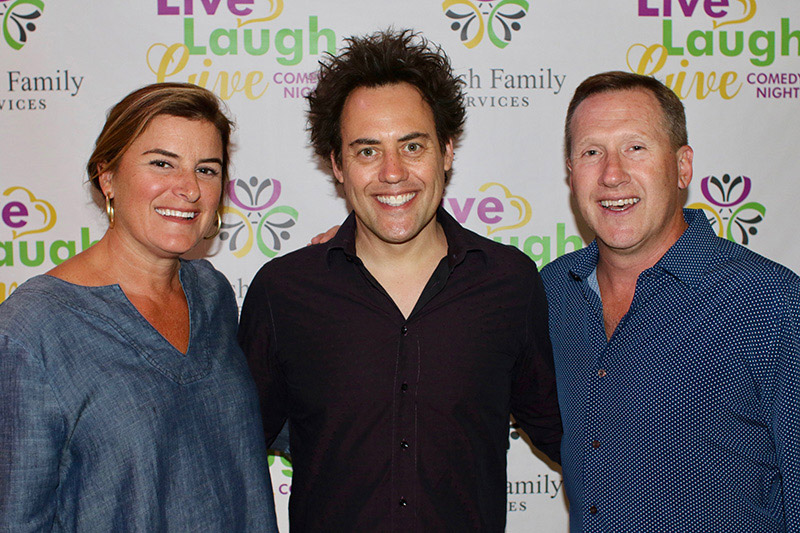
The guests settled in, relaxed, and quickly began laughing  as headliner, Orny Adams, delivered his one-liners and  jokes. The crowd of 275 guests also raised their paddles  and opened their hearts during the live auction and call to  the heart, contributing to the $125,000 raised during this  Night of Laughter, Lifetime of Healing event. 

We are awed, moved, and inspired by the generosity  of this community and were especially touched when Eric  and Lori Sklut offered to match the funds raised during the  call to the heart.  

A special thank you to our entertainment underwriters,  Adam and Kim Levy, Co-Chairs, Suzy Catenazzo and Andrea  Cronson, our Gilda Radner Sponsor Izzy’s Catering  and all who donated their time, talent, and gifts. This evening  would not have been possible without your support,  faith, and belief in what we do.

Click here to view photo gallery

Back to School – Getting Ready

Back to School – Getting Ready

Back to School – Getting Ready

Whether the summer was jampacked  with camp, play dates,  outings, and other fun activities,  or filled with complaints about  being bored with nothing to do,  kids often have a tough time making  the back-to-school transition.  It can be especially challenging  when balancing work and a busy  family life. 

And while the start of a new  school year is exciting for most  kids it can also bring with it a  spike in anxiety, even for kids  who are usually pretty easy going,  so it is not uncommon to see a rise  in some difficult behaviors from  your child including (by age):  

  • Toddler and Pre-School Age:  increased tantrums, separation  anxiety, regression (may seem  like they are going backwards in  their development but it is usually  temporary) with toilet training,  change in sleep schedule/bedtime  problems, increased crying and  power struggles, not following  directions.  
  • Elementary Age: talking  back, disobedience, fighting and  aggression, worries, anxiety,  nightmares and sleep schedule  changes, bed-wetting, irritable  mood, lying, fighting with siblings,  difficulty with friends at  school, and resistance to school  routine.  
  • Middle/High School: irritable  mood, “rude” and disrespectful  behavior, power struggles,  increased anxiety, shift in focus  to peer/friendships, and talking  back.  

We all want our kids to lead  happy and fulfilled lives and at  any given time we are doing our  best to make that happen. Sometimes  tips and guidance from outside  sources can help. Actively  participating in parenting education,  formal or informal can yield  strong benefits for both parents  and their children. After all, as a  parent, who wouldn’t want their  child to calmly follow instructions,  do well at school, make  friends easily and feel good about  themselves? A 2016 review of  parent education programs from  the Wilder Foundation found that  children of parents who participate  in parenting education often  demonstrate higher levels of  empathy, sharing, and helping  others, and have less destructive  behaviors such as aggression, delinquency,  and hyperactivity.  

According to the Triple P Positive  Parenting Program, one of  the few parenting programs based  on evidence and research, parents  who use positive parenting  say they feel more confident, less  stressed, and have less conflict  with their partner over parenting  issues.  

Triple P’s approach to positive  parenting is based on some  very simple ideas that have been  shown to help make raising children  easier. There are hundreds  of evaluation papers and randomized  controlled trials that show  Triple P can work for most families  – across different cultures, socio-  economic groups and in many  different family structures. Some  key highlights:  

  • Triple P reduces problem  behavior in children and improve  parents’ wellbeing and parenting  skills.  
  • In communities where Triple  P is widely available, (which it is  in NC) children have fewer behavioral  and emotional problems.  
  • Parents using Triple P say  they are less stressed, less depressed,  and don’t use harsh discipline.  

Here are some Triple P Positive  Parenting Strategies that may  help with Back to School:  

Establishing a Bedtime Routine,  including a regular bedtime,  a child friendly checklist that the  child uses each night to prepare  for bed, and preparing the child  ahead of time each night before  the routine, praising specific behaviors  the next morning helps. 

 To avoid talking back and  fighting, Triple P suggests a  “Planned ignoring for undesirable  behavior.” When your child  demonstrates an undesired behavior  such as tantrums or talking  back, Triple P suggests ignoring  the behavior entirely until the  tantrum stops. This technique is  used is specific situations with  the coaching of your Triple P provider.

For teens with anxiety, talk  openly about feelings and how  to deal with upsetting events,  encourage teenagers to develop  problem-solving skills (which  your Triple P provider can help  with one an individual basis). 

For stronger communication  with your teens, especially about  fear-based situations, engaging  in “Casual Conversation” and  listening to their fears may not  sound like a “big deal” to youbut  it feels like a bid deal to them. 

Manage your own emotions  – The most important lesson in  Triple P is to manage your own  emotions, stay calm, set a positive  example, and give positive  attention.  Triple P is a parenting program  but it doesn’t tell you how to be  a parent. It’s more like a toolbox  of ideas.

If you or someone you  know is faced with parenting  challenges or would like to learn  how to encourage good behavior  and manage the challenging  behaviors, please call 704-364-  6594. Jewish Family Services’  clinical therapists are credentialed  in Triple P. They may use these  and other strategies to help get  you through the tough times.

National Comedian, Orny Adams, Comes to Charlotte for Live Laugh Give Comedy Night to Benefit Those in our Community Struggling with Domestic Violence, Mental Health, Aging, Food Insufficiency and Trauma

National Comedian, Orny Adams, Comes to Charlotte for Live Laugh Give Comedy Night to Benefit Those in our Community Struggling with Domestic Violence, Mental Health, Aging, Food Insufficiency and Trauma

WHAT: Approximately 275 guests will attend Jewish Family Services’ annual fundraiser, which provides the non-profit with a platform to educate the community about its programs and services, and through a client testimonial, share the impact those services can have when someone is in need. 

WHEN: Sunday, June 2, 2019 

WHERE: Temple Beth El, 5101 Providence Rd., Charlotte, NC 28226 

MORE INFO: Jewish Family Services is welcoming the members of the community with the hopes of creating a deeper understanding of the growing need for services in Charlotte. Guests will get to enjoy a pre-reception, comedy show, raffles prizes, and auction while hearing one woman’s story of triumph after a very deep loss. 

For almost 40 years, Jewish Family Services has been a one-stop shop, primary resource for those struggling in our community. The Agency strengthens and empowers individuals and families by using four core competencies: Emotional Health and Well-being, Senior Engagement, Crisis Response and Assistance and Community Programs and Education. For more information, call (704) 364-6594 or go to jfscharlotte.org. 

 MEDIA CONTACT:
Bonnie Bonomo
(704) 944-6884 Direct
(954) 298-0006 Cell
Bonnie.bonomo@jfscharlotte.org 

Helping To Break the Stigma Surrounding Mental Health

Helping To Break the Stigma Surrounding Mental Health

Helping To Break the Stigma Surrounding Mental Health

Over the past eighteen months, through the work of the Mental Health Initiative, our community has been exposed to a diversity of facts, programs and marketing messages regarding the impact Mental Health has on our day-today lives. In recognition of May as Mental Health Awareness Month, it would seem wise to highlight some of the more significant issues affecting our emotional well-being.

  • 1 in 5 adults in the United States live with a mental health condition. * 60 million people in the United States face the day-to-day reality of living with a mental illness.
  • Half of all lifetime mental health conditions begin by age 14 and 75% by age 24, but early intervention programs can help. Yet only 50.6% of children with a mental health condition aged 8-15 receive mental health services.
  • 90% of those who die by suicide have an underlying mental illness. Suicide is the 10th leading cause of death in the United States, but suicide is preventable.
  • In North Carolina, suicide rates for youth 10-17 have doubled in the last 10 years and is now the 2nd leading cause of death for that age group, second only to auto accidents.
  • The best treatments for serious mental illnesses today are highly effective; between 70 and 90% of individuals have significant reduction of symptoms and improved quality of life with the right treatments and supports.
  • 56% of American adults with a mental illness do not receive treatment.

With the prevalence of mental health issues growing so significantly, the reality is that almost everyone in today’s society is impacted by knowing someone; a family member, friend, co-worker or neighbor who is struggling with a mental health issue. Why then are we still challenged with the “stigma” of seeking mental health counseling? For so many, there is still the long-term belief that seeking treatment for a mental health issue is a weakness.

If as individuals we acknowledge that mental health is affecting our lives; and if as a friend or loved one we recognize that accessing treatment can help those that we care about; then as a community it is critical that we collectively work to change the culture of how we perceive mental health. Just as we don’t think twice about seeking treatment for diabetes or taking medication for high blood pressure or getting physical therapy for a torn knee, so should we just as easily seek treatment for depression, anxiety, or any other issue that is impairing our emotional health and well-being.

As we look to raise awareness regarding Mental Health let us all promote good emotional health and recognize that accessing treatment is a strength, not a weakness. Personally, take the step to reach out to a family member, friend or co-worker that is struggling. Talk to them, encourage them to seek the treatment they need and support them in taking a positive step towards healing an emotional wound. If you are interested in helping to break the stigma around Mental Health or you want to learn more about accessing treatment, contact Jewish Family Services at 704-364-6594.

Jewish Family Services to Host Live Laugh Give Comedy Night Again This Year

Jewish Family Services to Host Live Laugh Give Comedy Night Again This Year

Jewish Family Services to Host Live Laugh Give Comedy Night Again This Year

What do you get when you combine a funny Jewish comedian and a great show with a VIP experience, live auction, and raffle prizes? Jewish Family Services’ Live Laugh Give Comedy Night. When asked what inspired JFS to start this event, Howard Olshansky, JFS Executive Director responded, “There are three things that bring people together for a good cause: laughter, prizes, and good food. We happen to have all three at our event.”

This year’s event will be held on Sunday, June 2 at Temple Beth El. The headliner for the evening is comedian Orny Adams, best known for his abundant energy, his many appearances on late night television and his role as Coach Bobby Finstock on the TV show Teen Wolf. After last year’s success, returning co-chairs, Suzy Catennazo and Andrea Cronson weigh in about last year’s fundraiser.

JFS: Tell me about your experience with the Live Laugh Give Comedy Night.

Suzy Catenazzo: Our goal is to provide a unique opportunity for entertainment while supporting a great cause. The entire event, from the food and drinks at the cocktail reception to the hilarious comedy show was so much fun. My favorite part was watching a packed house of people all coming together and laughing together.

Andrea Cronson: Laughing helps when times are rough. I think comedy is a good pairing for our fundraiser. Comedians make jokes about us, so we can laugh at ourselves and feel good doing it.

JFS: Why do you feel supporting the Live Laugh Give Comedy Night is important?

Suzy Catenazzo: I got involved with JFS because I believe they play such an important role. They provides social services that are easily accessible, serving people of all ages. This event, especially with the auction and call to the heart gave people the opportunity to show how important JFS is to this them.

Andrea Cronson: I think we all want to help our fellow human beings. We all run into difficulties from time to time and it’s important to have a safety net and that’s what JFS is, a safety net to so many people.

One of the many highlights of the event was the auction. With only three items to bid on the bidding was competitive.

Royal Hideaway Playacar and Mann Travels offered a threenight four-day stay at a five-star resort in the Riviera Maya. Wendy and Adam Petricoff won.

JFS: Tell us about the trip.

Wendy Petricoff: My husband bought the trip, not only to get away but because he knows JFS is my favorite charity. I just love the way JFS supports the community. The trip was so relaxing. The property was beautiful and our room was top notch; beautifully appointed.

Snap Av donated a SunBrite 43” 4K UHD Outdoor TV with an all-weather soundbar. Joel Pace won.

JFS: Tell us about your winnings.

Joel Pace: I was determined to win this prize. It’s great. Works beautifully. The event was amazing. From the time you got there until the time you left everything was great.

The Eat-Play-Stay Uptown: The Ritz Carlton, Blumenthal Theatre of Performing Arts, and Ciderworks.

JFS: Tell us about your experience.

Mason Sklut: We went with the some friends on the tour of the Cider Brewery and had a really nice time. It had that brewery vibe; open, rustic, lots of board games. It was interesting to see how the cider is made. The Book of Mormon was hilarious and had us in tears. We are looking forward to getting some R&R at our upcoming stay at the Ritz.

According to JFS Development Manager Susan Meyer, the committee has been working diligently and putting the final touches on this year’s auction items. “There was so much enthusiasm generated around stepping up packages we even added one more,” Meyer said. “We can’t wait to see how our guests respond.” This year’s items include a Comedy Zone Golden Ticket Package, a stay at the Kiawah Island Golf Resort, a one-year membership to Scout and Cellar wine club, and through Mann Travels, a vacation at Royal Hideaway Playacar in Riviera Maya.

Tickets are on sale now for the Live Laugh Give Comedy Night, benefitting Jewish Family Services. To select which experience you would like and pre-purchase raffle tickets, go to jfscharlotte. org.

JFS Marks a Year of Enhancing Programing for Holocaust Survivors

JFS Marks a Year of Enhancing Programing for Holocaust Survivors

JFS Marks a Year of Enhancing Programing for Holocaust Survivors

As an Executive Director, on any given day you can be in receipt of notification about a grant opportunity. The majority you rule out for some reason. But according to Howard Olshansky, Executive Director of Jewish Family Services, “This one completely grabbed my interest.” 

As an Executive Director, on any given day you can be in receipt of notification about a grant opportunity. The majority you rule out for some reason. But according to Howard Olshansky, Executive Director of Jewish Family Services, “This one completely grabbed my interest.” It was from the Jewish Federations of North America’s Center for Advancing Holocaust survivor Care and was all about enhancing the quality of life for a community’s Holocaust Survivor population utilizing a trauma-based approach. “I had only been with JFS about a year but one of the things that struck me was the gap in resources available to engage individually with our community’s survivors and enhance their connection to the community and with each other.”

This month will be a year since JFS was awarded a substantial grant from JFNA with three primary focus areas:

  • Enhancing the engagement of our community’s Holocaust survivors with the community and increasing socialization opportunities especially with each other.
  • Recognizing the trauma that a survivor of the Holocaust has experienced and lived with and creating every opportunity possible for any survivor in our community to leave their legacy by documenting their testimony in a sensitive, supportive environment.
  • Providing programming and support that recognize the challenges faced by children and caregivers of Holocaust survivors.

Over the past year, spearheaded by Sheryl Gerrard and Dana Kapustin, who work in JFS’ Department for Senior Engagement services, JFS has been overwhelmed at the level of interest and engagement from our community’s survivors. Through JFS’ outreach efforts, along with support from our community partners, JFS has been able to identify and engage 30 survivors in our community, some that we didn’t even know were living here, increase the participation of our survivors in community programs and, most significantly, hear and learn about their life experiences before, during, and since the Holocaust.

  • Results of the funding from this grant include the highest level of participation from our survivor community ever in our community’s Yom HaShoah and Kristallnacht commemoration programs.
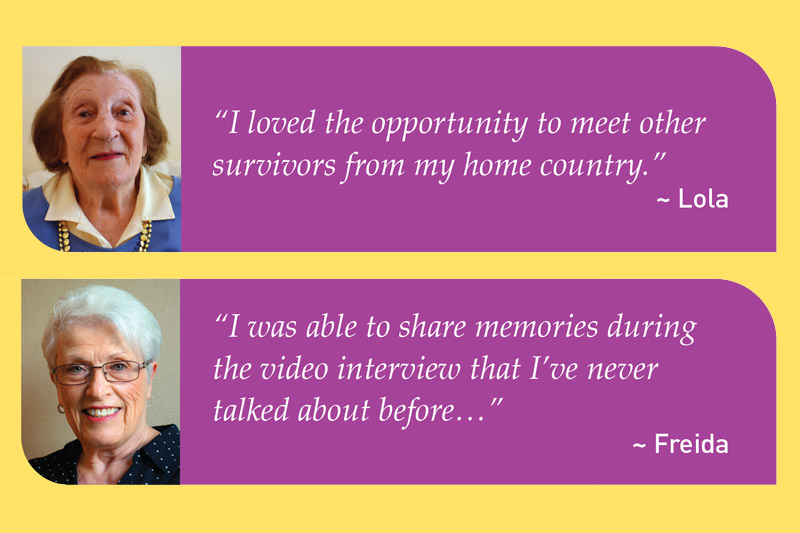
  • Our community’s Holocaust survivors have had multiple opportunities over this year to meet and socialize with each other including survivors in our community being introduced to other that were from the same country and even local towns whom they had never met.
  • Caregivers of survivors have had an opportunity to connect, commiserate, and learn from each other.
  • Seventeen of our community’s survivors were interviewed and had their testimonies video-taped. Some acknowledged that this was the first time they had actually told anyone of their survival experiences.
  • For the first time, survivors in our community participated in an Ethical Wills workshop, facilitated by Rabbi Judy Schindler, in which they were given the opportunity to put in writing a “legacy letter,” a gift, of their thoughts that they want to leave to future generations

The response from our survivor community to the events of the past grant year have been overwhelmingly positive. Comments such as “I appreciate being connected to this community since I’ve been so lonely” and “You’ve done a great job in recognizing us and helping us feel heard,” support the mission of the grant. For example, at the dinner prior to the Kristallnacht program, families were seated by country of origin. At a table for Russian- speaking individuals, one couple who recently moved here from Cleveland, were introduced to Marina, one of our survivors, who also lives here but had lived in Cleveland many years ago. As they explored their histories they realized that Marina was actually good friends with a relative of theirs. Small world! Marina had previously expressed feeling isolated and sad that she did not have many Russian speaking contacts.

As this article is being written, JFS was pleased to learn that we have been awarded a 2nd year grant to continue this work. We are excited to have the unique opportunity to expand social opportunities, enhance our engagement with our caregivers and continue to provide opportunities for survivors in our community to document their legacies.

Nutrition, Mental Health, and Mindfulness

Nutrition, Mental Health, and Mindfulness

Nutrition, Mental Health, and Mindfulness

“What’s for dinner?” Did you know the nutritional quality of the food you consume can impact your mental health? In fact, there is a known correlation between a person’s diet and the part of the brain responsible for emotion, memory and motivation.

By Claire Alessi

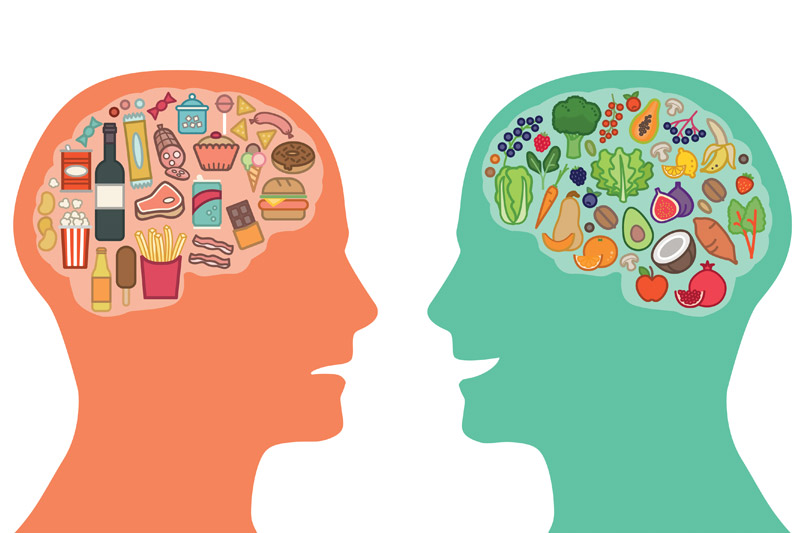
Those who eat more nutritious foods demonstrate better emotional responses and improved memory, which can also stave off Alzheimer’s Disease and Dementia. And, if you are one of those people who enjoy eating a diet rich in “whole foods” such as fruits, vegetables, nuts, whole grains, legumes, fish, and unsaturated fats, you are up to 35% less likely to develop depression than those who eat less of those foods. Conversely, research also shows that regularly eating processed foods can increase your risk of developing depression as much as 65% and depression has been identified as one of the top five leading causes of disabilities. Nutrients that may play a role in combating depression include:

  • Vitamin B-12 and folate. Good sources of B-12 are salmon and trout. Folate is found in dark leafy vegetables, almonds, dairy and fortified whole-grain breakfast cereals.
  • Omega-3 fatty acids. The best sources of omega-3 fatty acids are fatty fish like salmon, catfish and trout. Other sources include ground flaxseeds, walnuts and omega-3 fortified eggs.

And, it is not only beneficial to observe what’s for dinner, but how you eat your dinner. The term mindfulness, “the practice of being aware of your body, mind, and feelings in the present moment, thought to create a feeling of calm”, has been gaining in popularity the last number of years. Having a mindfulness routine has been identified as a key practice to alleviating mental illness symptoms.

So what does mindful eating look like? In a very basic sense, mindful eating means eating slowly while noticing all the different sensory aspects of food such as taste, texture and aroma. Practicing mindfulness has proven to decrease stress and increase enjoyment. So it seems eating more nutritiously and mindfully, has its benefits. Here’s an exercise you can try to eat more mindfully – Eating an Orange Mindfully. Find a quiet space with limited distractions before beginning this exercise.

  1. 1Hold the orange in your hand and examine it. Look at the orange as if you have never seen an orange before—engaging the five senses as you eat the orange.
  2. Next, put the orange up to your nose and smell the aroma of the orange. Feel the texture of the orange peel.
  3. As you begin to peel the orange, notice the sound it makes as you peel it. Observe the aroma and how it continues to grow as you continue to peel it.
  4. Look closely at the peeled orange and notice the different colors and textures between the sections of orange and its white fibers.
  5. Pull apart the sections and gently place the orange in your mouth, letting it lie on your tongue first without taking a bite. Observe what you taste, feel, and recognize.
  6. Bite down on the orange and notice the flavor. Begin chewing and observe how the texture and consistency of the orange changes as you continue to chew.
  7. When ready, swallow the orange and be conscious of the act of swallowing. Attempt to observe this action as the orange moves down your throat to your stomach.
  8. Take time after this exercise to reflect on your experience and observations.